

Aircraft Seals Market Set to Reach US$ 4.25 Billion by 2035, Driven by Fleet Expansion and Advanced Material Innovations
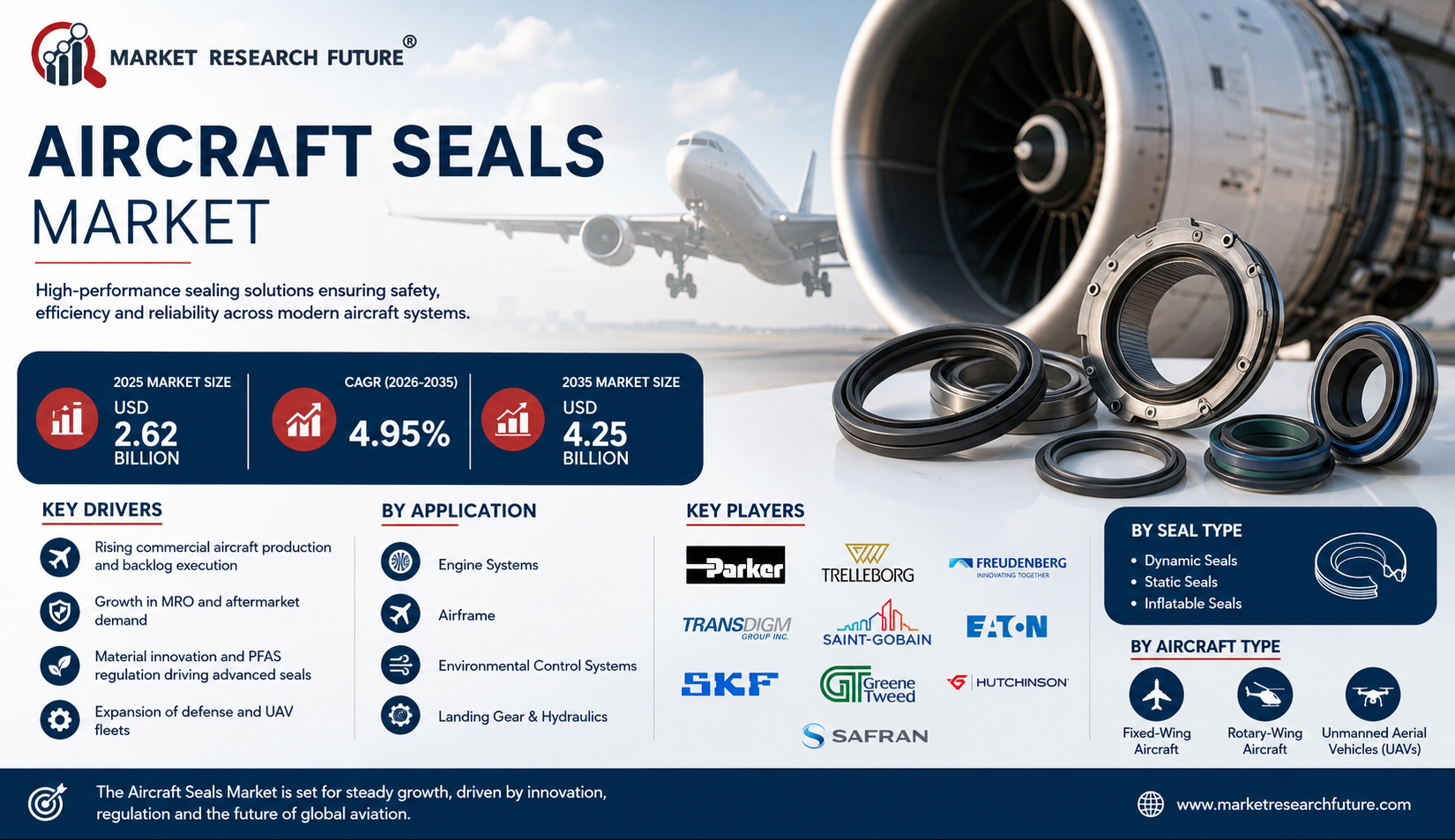
Aircraft Seals Market is projected to grow from USD 2.62 billion in 2025 to USD 4.25 billion by 2035, reflecting a CAGR of 4.95% during 2026 to 2035.
NEW YORK, NY, UNITED STATES, July 13, 2026 /EINPresswire.com/ -- The global Aircraft Seals Market is experiencing consistent and meaningful growth as the aviation industry continues to expand, modernize, and adopt more advanced technologies. Aircraft seals may appear to be small and simple components, but they are essential to the safe and efficient operation of nearly every aircraft system. These components help prevent leakage, maintain pressure, protect sensitive systems from contamination, and ensure that aircraft can operate reliably in highly demanding environments. Whether used in engines, landing gear, hydraulic systems, cabin doors, or environmental control systems, seals are indispensable to aircraft performance and safety.The market is being supported by several long-term trends, including the expansion of commercial airline fleets, rising defense spending, increasing aircraft maintenance requirements, and the development of new sealing materials that can withstand extreme temperatures, pressures, and chemical exposure. As aircraft become more complex and sustainability requirements become stricter, the demand for advanced sealing solutions is expected to rise steadily.
Market Overview:
Aircraft seals are precision-engineered components designed to prevent the escape of fluids and gases while also protecting aircraft systems from external contaminants such as dust, moisture, and debris. They are used in a wide range of applications, including engines, fuselage structures, landing gear, fuel systems, hydraulic systems, and cabin pressurization systems. Because aircraft operate under extreme conditions, seals must perform reliably under high pressure, rapid temperature changes, vibration, and mechanical stress.
Request Sample of Report: https://www.marketresearchfuture.com/sample_request/6115
The importance of aircraft seals lies in their ability to support both safety and efficiency. For example, in engine systems, seals help contain lubricants and fuel while preventing leaks that could reduce performance or create safety hazards. In cabin systems, seals help maintain pressurization and temperature control, which are essential for passenger comfort and safety. In landing gear and hydraulic systems, seals ensure smooth operation and prevent fluid loss that could compromise aircraft control.
The market includes a combination of large global suppliers and specialized manufacturers that focus on advanced materials and custom-engineered solutions. These companies serve both original equipment manufacturers (OEMs) and the aftermarket. OEM demand is driven by new aircraft production, while aftermarket demand comes from maintenance, repair, and overhaul (MRO) activities. As global fleets age and aircraft utilization increases, replacement demand for seals continues to grow, making the aftermarket an important source of revenue.
Key Market Drivers:
The Aircraft Seals Market is influenced by several major growth drivers, each contributing to the expansion of demand across commercial, military, and emerging aviation segments.
Commercial Aircraft Backlog Execution (+1.4% CAGR Impact)
One of the strongest drivers of market growth is the large backlog of commercial aircraft orders. Airlines around the world are renewing and expanding their fleets to meet rising passenger demand and improve fuel efficiency. Aircraft manufacturers are increasing production rates to address this backlog, and every new aircraft requires thousands of sealing components across multiple systems. As production volumes rise, so does the demand for high-performance seals. This driver has a direct and measurable impact on market growth because seals are essential parts of every aircraft build.
PFAS Regulation and Material Substitution (+0.9%)
Environmental regulations are becoming increasingly important in the aerospace industry, especially in North America and Europe. One major issue is the use of PFAS, or per- and polyfluoroalkyl substances, which have been widely used in high-performance sealing materials due to their chemical resistance and durability. However, concerns about environmental persistence and health effects are pushing manufacturers to develop PFAS-free alternatives. This regulatory pressure is encouraging innovation in advanced elastomers, fluoropolymers, and composite materials. Companies that can successfully replace PFAS-based products with sustainable alternatives are likely to gain a competitive advantage.
Defense Sustainment and Modernization (+0.7%)
Military aircraft fleets require continuous maintenance, upgrades, and modernization to remain operational and mission-ready. Rising geopolitical tensions and increased defense budgets in many countries are supporting demand for military aviation systems. Aircraft seals are critical in defense applications because they help ensure reliability in harsh environments and under demanding operational conditions. Military aircraft often operate for long service lives, which creates ongoing demand for replacement seals and upgraded materials. This makes defense sustainment an important and stable market segment.
MRO Aftermarket Cycle Acceleration (+0.6%)
As aircraft age and accumulate flight hours, maintenance requirements increase. Seals are wear-and-tear components that must be inspected and replaced regularly to maintain aircraft safety and performance. The growing global fleet, combined with higher aircraft utilization rates, is accelerating demand for maintenance, repair, and overhaul services. This trend benefits the aftermarket segment, where replacement seals are sold to airlines, MRO providers, and defense operators. Because seals are essential for continued airworthiness, the aftermarket provides a recurring and dependable revenue stream.
Next-Generation Engine Programs (+0.5%)
Aircraft engine manufacturers are developing new engine architectures that improve fuel efficiency, reduce emissions, and support sustainability goals. These next-generation engines operate at higher temperatures and pressures, which creates more demanding requirements for sealing systems. Seals used in these engines must resist heat, friction, and chemical exposure while maintaining long-term reliability. As engine technology advances, the need for specialized sealing solutions increases, creating opportunities for material innovation and product development.
UAV Fleet Expansion (+0.4%)
Unmanned aerial vehicles, or UAVs, are becoming increasingly important in both defense and commercial applications. These aircraft require lightweight, compact, and highly reliable components, including seals. UAVs often operate in unique environments and may require sealing solutions tailored to electric propulsion systems, sensors, and lightweight structures. As UAV adoption expands, the demand for specialized sealing technologies is expected to grow steadily.
Hydrogen and Sustainable Aviation Fuel (SAF) R&D (+0.3%)
The aviation industry is investing heavily in sustainable technologies, including hydrogen propulsion and sustainable aviation fuels. These new propulsion systems create unique sealing challenges because they may involve cryogenic temperatures, alternative fuel chemistries, and new system architectures. Seals used in hydrogen-powered aircraft must be capable of handling extremely low temperatures and preventing leakage of volatile gases. Research and development in this area is opening new opportunities for advanced materials and next-generation sealing designs.
Emerging Opportunities:
The Aircraft Seals Market is not only growing through traditional aviation demand but also through several emerging opportunities that are reshaping the future of the industry.
Additive Manufacturing for Complex Seal Geometries
Additive manufacturing, also known as 3D printing, is enabling the production of seal designs that were previously difficult or expensive to manufacture using conventional methods. This technology allows engineers to create complex geometries, integrated cooling channels, and lightweight structures that improve performance and reduce material waste. Additive manufacturing also supports faster prototyping and customization, which is especially valuable in aerospace applications where precision and performance are critical. As the technology matures, it is likely to play a larger role in seal production.
Advanced Air Mobility (AAM) Ecosystem
The rise of advanced air mobility, including electric vertical takeoff and landing (eVTOL) aircraft, is creating a new category of aviation demand. These aircraft rely on electric propulsion, battery systems, and lightweight structures, all of which require specialized sealing solutions. Unlike traditional aircraft, eVTOL platforms may face different thermal, electrical, and mechanical challenges. Companies that begin developing sealing technologies for this emerging market now will be better positioned to capture future demand as AAM systems move toward commercial deployment.
Emerging Market Expansion
Countries such as India, Indonesia, Vietnam, and other Southeast Asian nations are investing heavily in aviation infrastructure and fleet expansion. Rising middle-class populations, increased air travel demand, and government support for aviation development are driving aircraft purchases and airport modernization. This creates opportunities for seal manufacturers to establish local partnerships, expand distribution networks, and support regional OEM and MRO activity. Emerging markets are expected to become increasingly important to global aviation growth over the next decade.
Predictive Maintenance and Digital Integration
The integration of sensors and digital monitoring systems into aircraft components is transforming maintenance practices. In the case of seals, predictive maintenance can help operators identify wear, leakage risk, or performance degradation before failure occurs. This reduces downtime, improves safety, and lowers maintenance costs. Digital integration also creates opportunities for service-based business models, where manufacturers provide ongoing monitoring and support rather than only selling physical products. This trend is especially valuable in high-utilization fleets.
Cryogenic Sealing for Hydrogen Propulsion
Hydrogen propulsion systems require seals that can operate in cryogenic environments and maintain integrity under extreme thermal stress. This is a highly specialized area of development that demands advanced materials such as PTFE-metal hybrids and other engineered composites. As hydrogen aviation research progresses, companies that can solve these sealing challenges will be well positioned to serve a future market with significant long-term potential.
Recent Developments:
March 2025: Parker Hannifin expanded its aerospace capabilities through strategic acquisition initiatives aimed at strengthening its position in high-performance sealing technologies and integrated systems. This move reflects the company’s focus on broadening its aerospace portfolio and reinforcing its leadership in critical aircraft components.
January 2025: Trelleborg Sealing Solutions accelerated the development of PFAS-free sealing materials, focusing on sustainable alternatives for high-performance aerospace applications. This development highlights the industry’s response to environmental regulations and the growing need for eco-friendly material innovation.
July 2025: The U.S. Defense Logistics Agency awarded a contract for aircraft seals, demonstrating the continued importance of sealing components in defense maintenance and logistics operations. Such contracts reinforce the role of seals as essential parts of military readiness and long-term fleet support.
Competitive Landscape and Key Company Profiles:
The Aircraft Seals Market is moderately consolidated, with a small number of major players holding significant market share. Competition is based on material innovation, product reliability, engineering expertise, and long-term relationships with aircraft manufacturers and defense organizations.
Parker Hannifin (~12–15%) - Parker Hannifin is a leading supplier with a broad portfolio of aerospace sealing solutions. Its products cover engine, airframe, and hydraulic applications, and its vertically integrated operations allow it to control quality, innovation, and supply chain efficiency. This gives the company a strong competitive position.
Trelleborg Sealing Solutions (~9–12%) - Trelleborg is known for its expertise in polymer-based sealing technologies and its strong relationships with European OEMs. The company has a particularly strong presence in rotary-wing aircraft and other specialized aerospace applications.
Freudenberg Group (~7–10%) - Freudenberg is recognized for its advanced material development capabilities, especially in fluorosilicone compounds and PFAS alternatives. Its focus on innovation makes it an important player in the transition toward more sustainable sealing materials.
TransDigm Group (~6–9%) - TransDigm specializes in proprietary aftermarket seal kits and benefits from a high-margin business model based on sole-source supply. Its strong aftermarket presence makes it a key supplier for replacement and maintenance demand.
Saint-Gobain (~5–8%) - Saint-Gobain offers advanced PTFE and composite sealing solutions that are used across multiple industries, including aerospace. Its material expertise supports applications requiring high chemical and thermal resistance.
Eaton Corporation (~4–7%) - Eaton provides integrated sealing solutions as part of its broader fuel and motion control systems portfolio. This integration allows the company to offer system-level value to aircraft manufacturers.
SKF Group (~3–6%) - SKF combines sealing technologies with its expertise in bearings and rotating equipment. Its solutions are focused on reliability and long service life.
Greene Tweed (~3–5%) - Greene Tweed specializes in high-performance materials such as PEEK, which are used in extreme operating environments where durability and chemical resistance are essential.
Hutchinson (TotalEnergies) (~2–4%) - Hutchinson has a strong presence in vibration isolation and fuel system sealing, particularly within European aerospace supply chains.
Safran (~2–4%) - Safran leverages its vertical integration within engine programs to develop proprietary sealing technologies that support its aerospace systems business.
Segment Analysis:
The Aircraft Seals Market is segmented by seal type, application, material, and aircraft type, each reflecting different performance requirements and market needs.
1. By Seal Type
Dynamic Seals: Used in moving components such as rotating shafts and actuators. These seals must withstand friction, motion, and wear while maintaining a tight seal.
Static Seals: Used in fixed joints and interfaces where no movement occurs. Their primary role is to prevent leakage and maintain pressure.
Inflatable Seals: Used in specialized applications such as doors, cargo compartments, and access panels. These seals expand when pressurized to create a secure barrier.
2. By Application
Engine Systems: Require seals that can withstand high temperatures, pressure, and exposure to fuel and lubricants.
Airframe: Includes door seals, window seals, and structural sealing components that protect the aircraft body.
Environmental Control Systems: Help maintain cabin pressure, temperature, and air quality for passengers and crew.
Landing Gear & Hydraulics: Demand robust seals that can handle mechanical stress, fluid pressure, and repeated motion.
3. By Material
PTFE & Composites: Offer excellent chemical resistance, low friction, and thermal stability.
Fluoroelastomer (FKM): Widely used for fuel and oil resistance in demanding environments.
Fluorosilicone (FVMQ): Suitable for extreme temperature ranges and aerospace fluid compatibility.
Silicone: Provides flexibility, weather resistance, and good performance in moderate conditions.
Nitrile (NBR): A cost-effective option for general-purpose sealing applications.
4. By Aircraft Type
Fixed-Wing Aircraft: Represent the largest share of demand due to commercial aviation and military transport aircraft.
Rotary-Wing Aircraft: Require specialized seals for helicopters and other rotorcraft.
Unmanned Aerial Vehicles (UAVs): An emerging segment with growing demand for lightweight and compact sealing solutions.
Regional Analysis:
North America - North America is the largest market for aircraft seals, supported by the presence of major aircraft manufacturers, strong defense spending, and advanced MRO infrastructure. The region also leads in aerospace innovation and certification standards.
Europe - Europe is a key region for material innovation and sustainable aviation development. Regulatory pressure is encouraging the adoption of eco-friendly sealing solutions, and the region has a strong base of aerospace OEMs and suppliers.
Asia-Pacific - Asia-Pacific is the fastest-growing region due to rising air travel demand, expanding airline fleets, and government investment in aviation infrastructure. Countries such as China, India, and Japan are major contributors to regional growth.
Middle East & Africa - This region is benefiting from airline expansion, airport development, and strategic investments in aviation hubs. The Middle East, in particular, is becoming an important center for global air connectivity.
Latin America - Latin America is an emerging market with gradual growth driven by fleet modernization, regional connectivity, and increasing demand for commercial aviation services.
Conclusion:
As the aviation industry moves toward more sustainable, digital, and high-performance systems, the importance of advanced sealing technologies will continue to increase. Manufacturers that invest in innovation, regulatory compliance, and strategic partnerships will be best placed to benefit from this evolving market. With strong opportunities in both OEM and aftermarket segments, the Aircraft Seals Market offers significant long-term potential for suppliers, investors, and aerospace stakeholders worldwide.
Browse More Reports:
Aircraft Engine Blade Market
https://www.marketresearchfuture.com/reports/aircraft-engine-blade-market-28985
Aircraft Insulation Market
https://www.marketresearchfuture.com/reports/aircraft-insulation-market-32834
Aircraft Screw Market
https://www.marketresearchfuture.com/reports/aircraft-screw-market-24143
Sagar Kadam
Market Research Future
+1 628-258-0071
sales@marketresearchfuture.com
Legal Disclaimer:
EIN Presswire provides this news content "as is" without warranty of any kind. We do not accept any responsibility or liability for the accuracy, content, images, videos, licenses, completeness, legality, or reliability of the information contained in this article. If you have any complaints or copyright issues related to this article, kindly contact the author above.
