

43% of Americans Want Tech Companies to Pay AI’s 'Water Bill,' New Study Shows
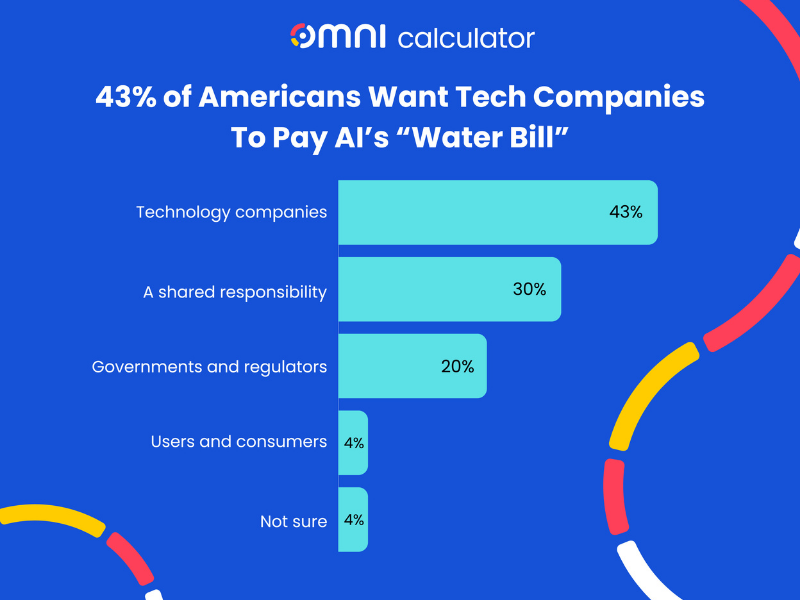
Who Should Pay AI Water Bills
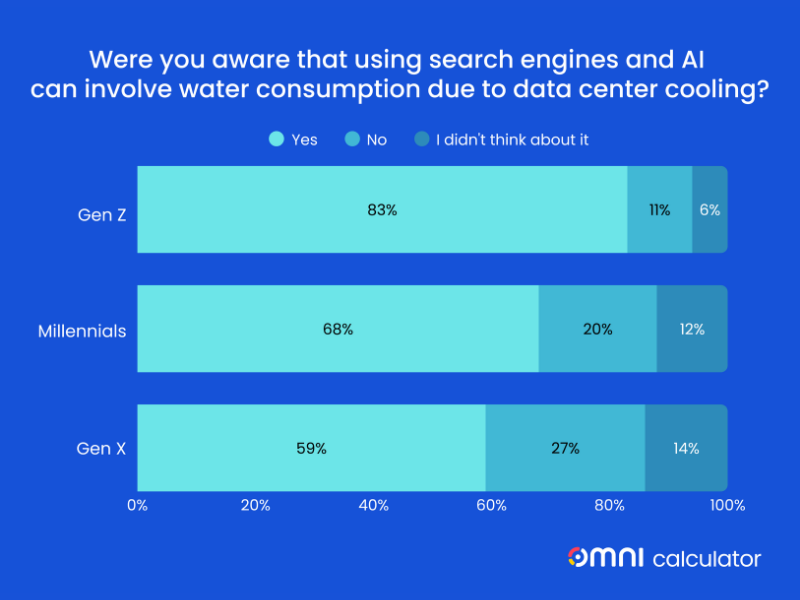
AI Water Footprint Generational Awareness Gap
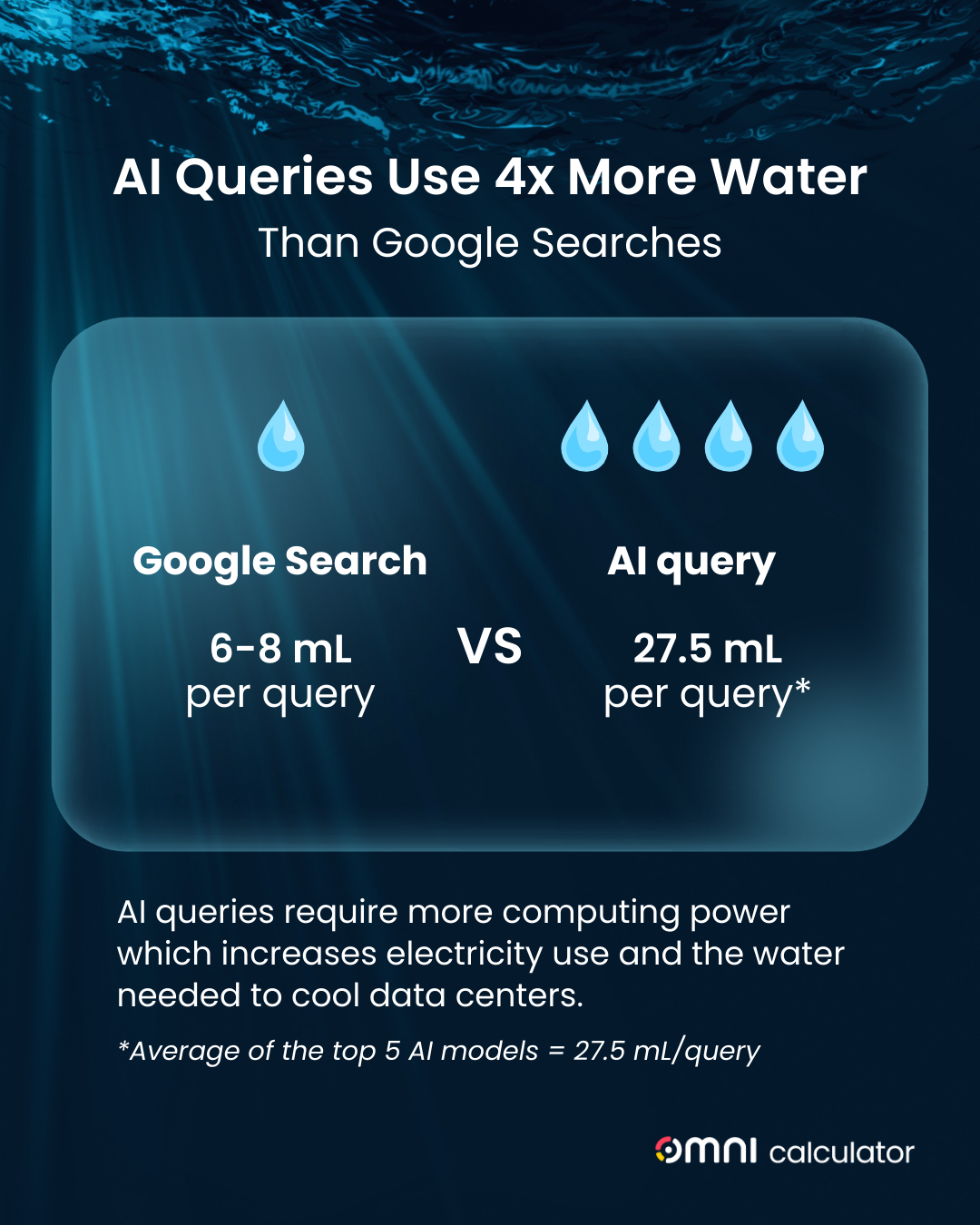
AI vs Google Search Water Footprint
20 daily AI prompts use 400+ water bottles yearly. Gen Z is 24% more aware than Gen X of AI’s hidden water footprint, new study finds ahead of World Water Day.
To bridge this awareness gap, Omni Calculator has launched the AI Water Footprint Calculator, an interactive tool that allows users to see the physical water cost of their digital habits in real-time.
The "Thirst" of a Prompt: Beyond the Screen The study’s most jarring finding lies in the physical cost of a digital question. While a Google search sips 7 mL of water, the average AI query 'drinks' 27.5 mL. Over a year, 20 daily AI prompts consume ~402 bottles of water, nearly 4x the footprint of traditional search.
"Omni AI Water Footprint Calculator shows that just 20 Chat GPT queries a day can consume over 500 bottles of water per year," says calculator lead researcher. "Most people understand their car’s gas mileage, but while awareness of data center cooling is growing, very few understand the actual 'water mileage' of their daily chatbot habits. We built this calculator to make that invisible cost visible"
Accountability: Who Picks Up the Tab? The American public is surprisingly unified on where the responsibility for sustainability lies. Only 4% of users believe the burden should be on individuals. Instead, 43% point directly at technology corporations, while 30% believe it must be a shared effort between tech giants, the government, and the public.
Women are leading the charge for accountability, scoring 50% higher than men in levels of "extreme concern" regarding their digital environmental footprint.
A Generational Reality Check The data shows that "digital natives" are paying closer attention to the infrastructure behind the screen:
- 83% of Gen Z is aware that data centers require massive amounts of water for cooling.
- This dropped to 59% of Gen X who shared that awareness; a 24% gap that leaves older generations largely in the dark about the impact of their technology use.
- Despite this gap, 3 out of 4 respondents claimed they would change their AI usage patterns if they knew the specific environmental cost.
Search vs. Synthesis: The Hybrid Habit Even with the AI boom, the "Google habit" remains strong. While 34% of Americans use AI multiple times a day, only 8% rely on it exclusively for complex tasks like trip planning. The vast majority (48%) still use a hybrid approach effectively doubling the digital energy and water required for a single search.
"Awareness is the first step toward a more sustainable internet," Rangsimatiti (Kat) Binda Saichompoo, researcher and sustainability advocate says. "Small digital shifts, like knowing when to use a simple search versus a high-powered AI, can save hundreds of gallons of water annually."
Try the Calculator: Readers and journalists can test their own "digital thirst" by using the interactive tool here: https://www.omnicalculator.com/ecology/ai-water-footprint
Reyhaneh Mansouri
Omni Calculator
rey.mansouri@omnicalculator.com
Visit us on social media:
LinkedIn
Legal Disclaimer:
EIN Presswire provides this news content "as is" without warranty of any kind. We do not accept any responsibility or liability for the accuracy, content, images, videos, licenses, completeness, legality, or reliability of the information contained in this article. If you have any complaints or copyright issues related to this article, kindly contact the author above.
